Loadouts & The Ten Essentials
A survival kit is not a magic talisman; owning gear does not grant you the capability to use it. Equipment is merely a force multiplier for your knowledge. Building a functional kit requires adhering to a structured loadout philosophy, ensuring you have the means to address the most critical threats to human life in the wilderness: exposure, dehydration, severe bleeding, and loss of orientation.
The 5 C's of Survivability
For a minimalist, everyday carry (EDC) or a lightweight daypack, the framework of the "5 C's" provides a robust foundation. These are items that are extraordinarily difficult to manufacture from natural materials under stress.
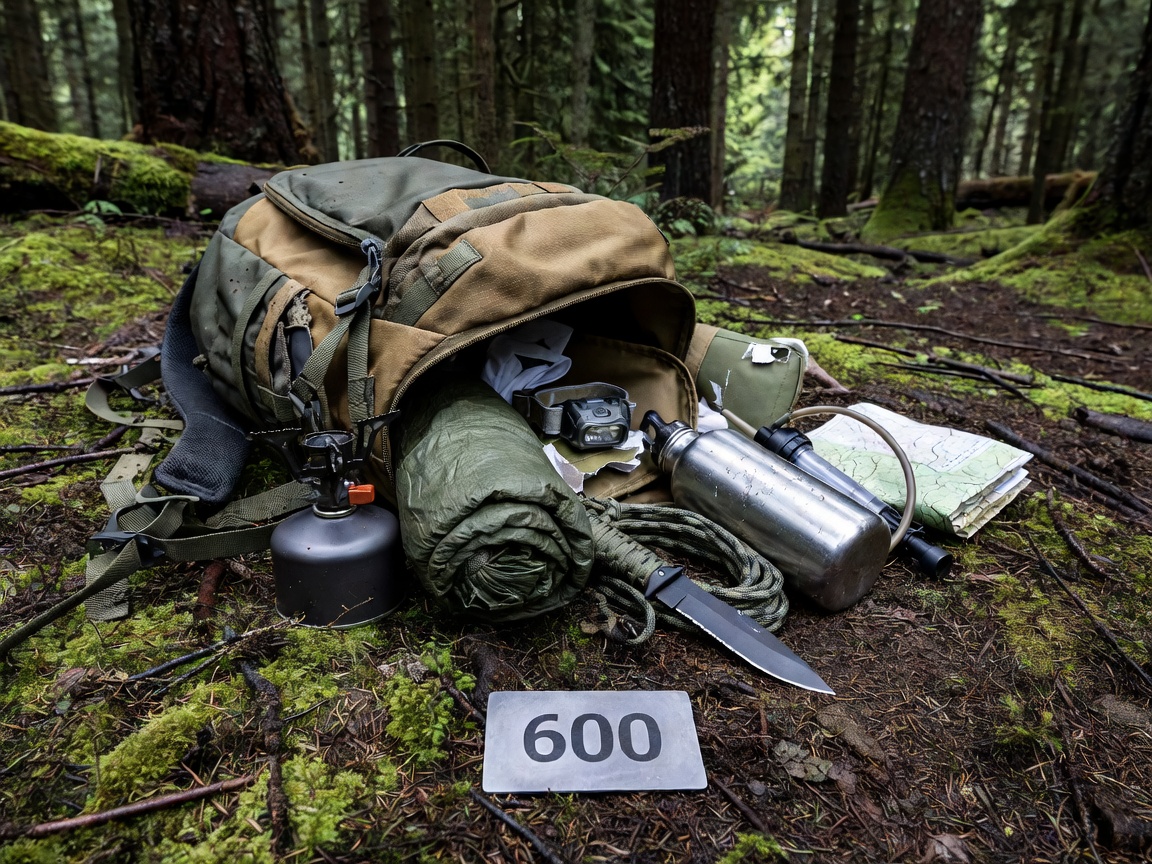
- Cutting Tool: A robust, full-tang fixed-blade knife. Folding knives have mechanical pivots that can break under lateral stress or batoning (splitting wood). Carbon steel throws excellent sparks when struck with flint, though it requires oiling to prevent rust.
- Combustion Device: Reliable fire starting. A ferrocerium rod and a sealed container of petroleum-soaked cotton balls, paired with standard butane lighters. Redundancy is key.
- Cover: An emergency space blanket (mylar) or a high-quality sil-nylon tarp. This provides immediate defense against convective heat loss and rain, buying you time to construct a natural shelter.
- Container: A single-walled, unlined stainless steel water bottle. Unlike plastic bladders or insulated flasks, a single-walled metal container can be placed directly into a fire to boil and purify water.
- Cordage: 550 Paracord or bank line. Creating natural cordage from plant fibers takes hours; carrying 100 feet of synthetic line allows you to build shelters and traps in minutes.
Expanding to the Ten Essentials
For extended backcountry operations, the loadout must expand to accommodate navigation and medical contingencies.
Navigation
GPS devices and smartphones are powerful tools, but batteries die and cold weather saps lithium-ion cells rapidly. A traditional baseplate compass with an adjustable declination bezel, paired with a topographic map of your operational area, is mandatory. Knowing how to shoot a bearing and triangulate your position using terrain features is a fundamental skill.
Medical and First Aid
Standard retail first aid kits are generally filled with small adhesive bandages useful only for superficial cuts. A survival medical kit must address trauma.
- Hemostatic Control: A CoTCCC-approved windlass tourniquet (e.g., CAT or SOF-T) for arterial bleeding.
- Pressure Dressings: An emergency trauma dressing (like an Israeli bandage) to pack wounds and apply heavy pressure to venous bleeds.
- Blister Care: Moleskin and zinc oxide tape. A severe blister can render you immobile, transforming a hike into a survival situation.
- Medications: Broad-spectrum antibiotics, antidiarrheals (severe diarrhea causes rapid, fatal dehydration), and antihistamines for anaphylactic reactions.
Illumination and Signaling
A high-lumen headlamp keeps your hands free for camp tasks. Ensure you carry spare lithium batteries, which perform better in cold weather than alkaline. For signaling, a simple acrylic signal mirror reflects sunlight for miles and cannot run out of power. A loud pealess whistle carries much further than the human voice and requires less effort to use when exhausted.
Pack Organization
Gear must be modular and protected. Waterproof dry bags should separate your kit by category (e.g., a red bag for medical, a yellow bag for fire/shelter). If your pack falls into a river, your insulating layers and sleeping gear must remain dry, or they become a liability. Weight distribution is also critical: heavy items (water, food) should sit close to the spine and mid-back to maintain your center of gravity and reduce fatigue.