Shelter Mechanics & Microclimates
Exposure is the most efficient killer in the wilderness. Hypothermia can set in even at temperatures as mild as 50°F (10°C) if paired with wind and moisture. Conversely, hyperthermia and severe sunburn can rapidly disable you in desert environments. A shelter's primary function is not comfort; it is to create a defensible microclimate that protects your core body temperature.
Site Selection: The First Decision
Constructing a perfect shelter in the wrong location is a fatal error. Before breaking ground, evaluate the terrain against the following criteria:
- Widowmakers: Look up. Dead branches or leaning trees that could collapse in high winds are known as widowmakers. Never sleep under them.
- Drainage and Flash Floods: Depressions and dry riverbeds look appealing for wind protection, but a sudden storm miles away can cause a deadly flash flood. Pitch your shelter on elevated, well-draining ground.
- Cold Sinks: Cold air acts like water; it flows downhill and pools in valleys and ravines. Sleeping halfway up a slope (the thermal belt) is often significantly warmer than the valley floor.
- Wind Orientation: Position the entrance of your shelter perpendicular to the prevailing wind to prevent convective heat loss, unless you are using a fire reflector to bounce heat inside, in which case the wind should carry the smoke away from the opening.
The Core Principle: Insulation
Conduction—the transfer of heat from your body to the cold ground—is responsible for massive caloric loss. The earth is a giant heat sink. Before constructing a roof, you must build a bed.
Create a mattress of dry leaves, pine boughs, or dried grasses. Once compressed under your body weight, this layer should still be at least four to six inches thick. If the material feels thin when you lie on it, you will lose heat rapidly. Gathering sufficient bedding often takes as much time and effort as building the overhead structure.
Structural Archetypes
The type of shelter you build depends entirely on your available materials, tools, and caloric budget.
The Debris Hut
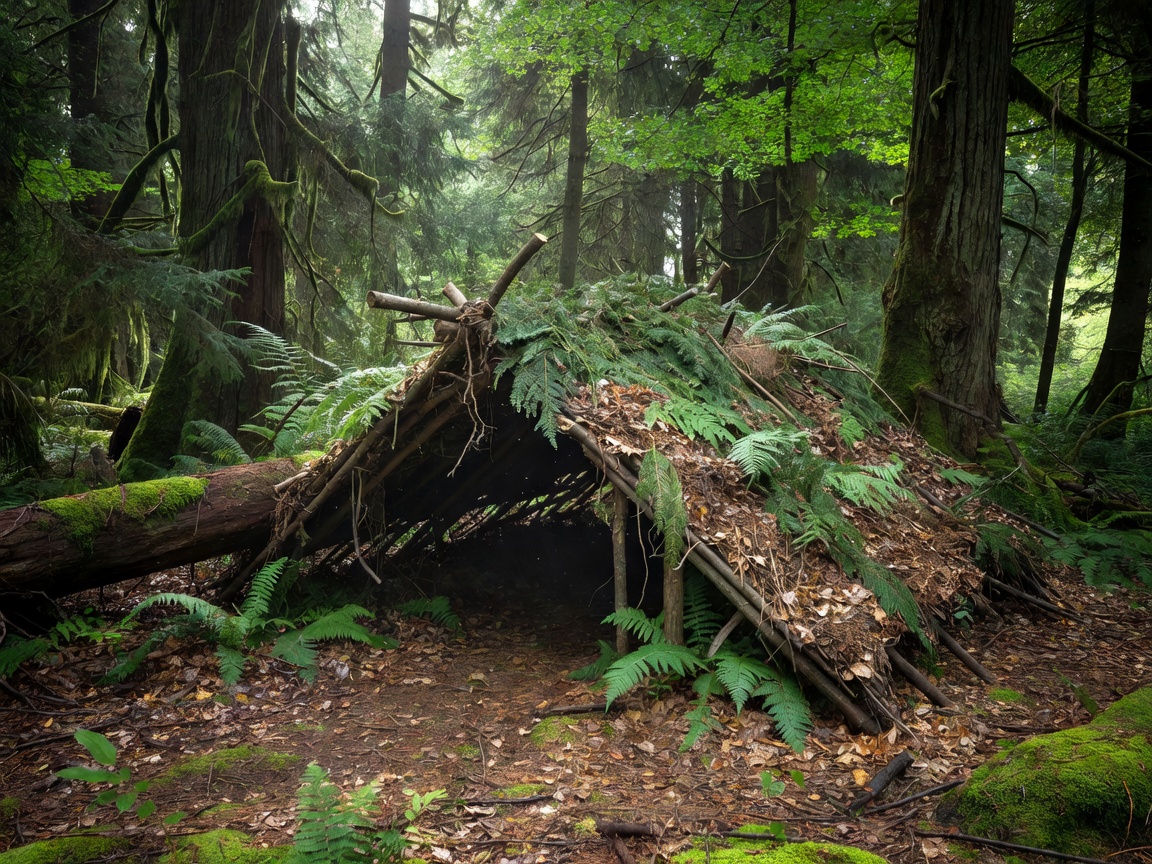
The debris hut is an exceptional thermal shelter for cold environments when you lack a sleeping bag. It functions like a massive, natural cocoon.
- Construct a sturdy ridgepole by resting one end of a long, strong branch on a stump or low tree crotch.
- Lean a ribcage of smaller branches against both sides of the ridgepole.
- Cover the ribcage with a latticework of lighter twigs to prevent debris from falling through.
- Pile dry leaves, pine needles, and brush over the structure until the walls are at least three feet thick.
- Stuff the interior entirely full of dry debris and burrow inside.
This shelter traps your body heat effectively but requires immense energy and time to construct. Avoid sweating during the build; damp clothing compromises insulation.
The Lean-To
A lean-to is a single-sided structure, highly effective for reflecting the heat of a fire but poor at trapping body heat without one.
Construct a horizontal crossbar lashed between two trees. Lean poles against this bar at a 45-degree angle. Thatch the roof with evergreen boughs, starting from the bottom and working upwards like shingles to shed rain. Build a small, long fire parallel to the opening, and construct a reflector wall behind the fire to push radiant heat into the shelter.
Tarp Setups
If you carry a robust, high-quality tarp, natural construction becomes secondary. A tarp is waterproof, windproof, and deploys in minutes.
- A-Frame: Suspend a ridgeline between two trees, drape the tarp over it, and stake the four corners to the ground. Excellent for rain and moderate wind.
- Plow Point: Tie one corner of the tarp to a tree at waist height and stake the remaining three corners securely to the ground. Extremely wind-resistant and fast to pitch.
Snow Shelters
In sub-zero alpine conditions, snow is your best insulator. A Quinzhee is built by piling snow into a massive mound, letting it sinter (harden) for several hours, and then excavating a living space inside. Ensure you leave a ventilation hole near the roof to prevent carbon monoxide poisoning and asphyxiation, particularly if you are using a candle or stove inside.